Introduction
From the word-of-mouth era to posting reviews online, the business world has gone through a disruptive change in the digital era. The e-commerce market is valued at a whopping $4,117 billion in the US and continually skyrocketing at a CAGR of 9.4%. With 2.64 billion people shopping online, it seems that there is no shortage of business in the cyber marketplace.
With so many options for customers to choose from, online reviews become a beacon of trust when choosing a product. Ever since its inception in the ’90s, internet reviews have guided customers through the digital world, helping them make purchasing decisions. Reviews provide real-life insights, both technical and non-technical, of a product or service and what a buyer can expect before investing in it.
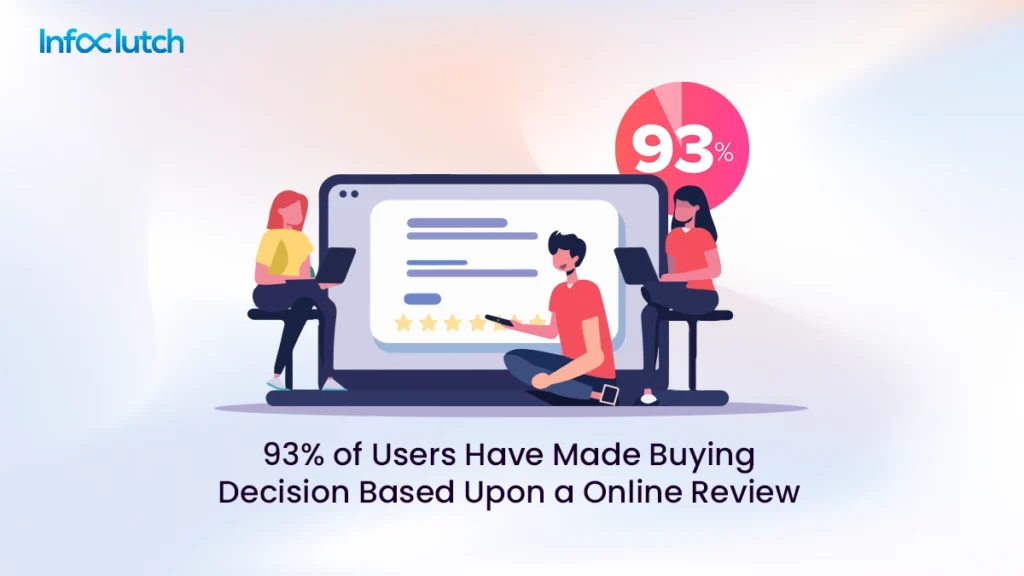
Well, it comes as no surprise when the latest studies show that almost 93% of customers read product reviews before making a purchasing decision.
As a business owner, online reviews might seem overwhelming, but trust us, reviews are a necessary evil that can make or break your business.
Well, worry not, because through this piece, let’s take a look at the effect of online customer reviews on purchasing decisions, the impact they hold from multiple perspectives, and how to turn negative reviews into revenue generators with a few simple steps.
Why are Reviews so Influential?
On a psychological level, humans are inherently creatures that are influenced by herd mentality; that is, most people feel safe when following others. In an uncertain environment, such as choosing between more than 1 product to buy, humans are wired to choose safety or make the safe choice, and in this situation, it is choosing the product with the most reviews.
From a business perspective, having reviews on your product/service can offer you various parameters to understand your position. Reviews can help you
- Build your brand
- Show how your brand stacks up against competitors
- Drive conversions
- Identify trends
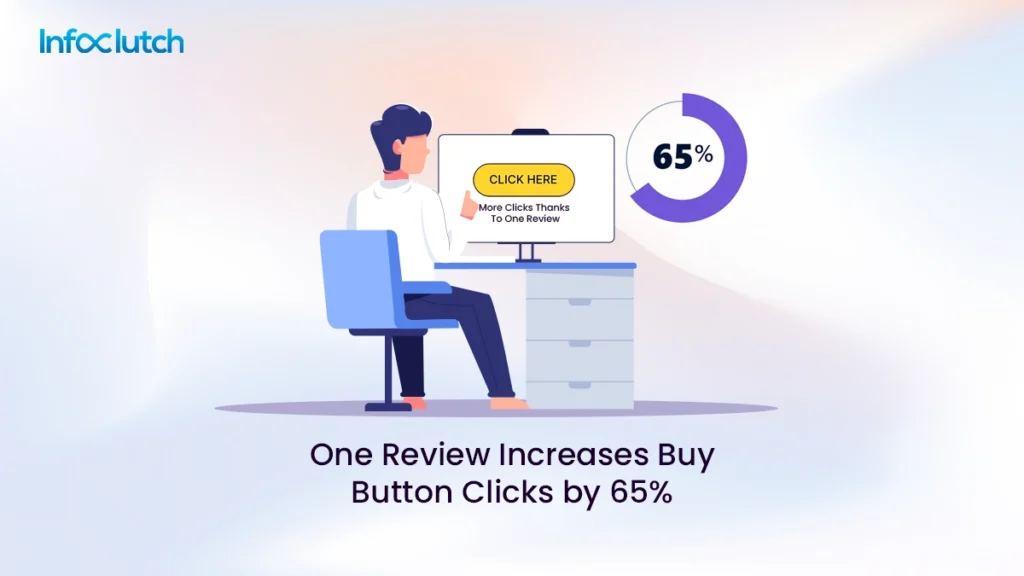
One recent study has also shown that one positive review increases the “buy” button clicks by 65%!
5 Reasons Why Reviews Are Important
1. Reviews Level the Playing Field
2. Improve your Rankings
3. Builds Social Proof
4. Increase Your Brand’s Trustworthiness
5. To Understand the Brand’s Shortcomings
Top 5 Business Review Websites
1. Google Business Profile
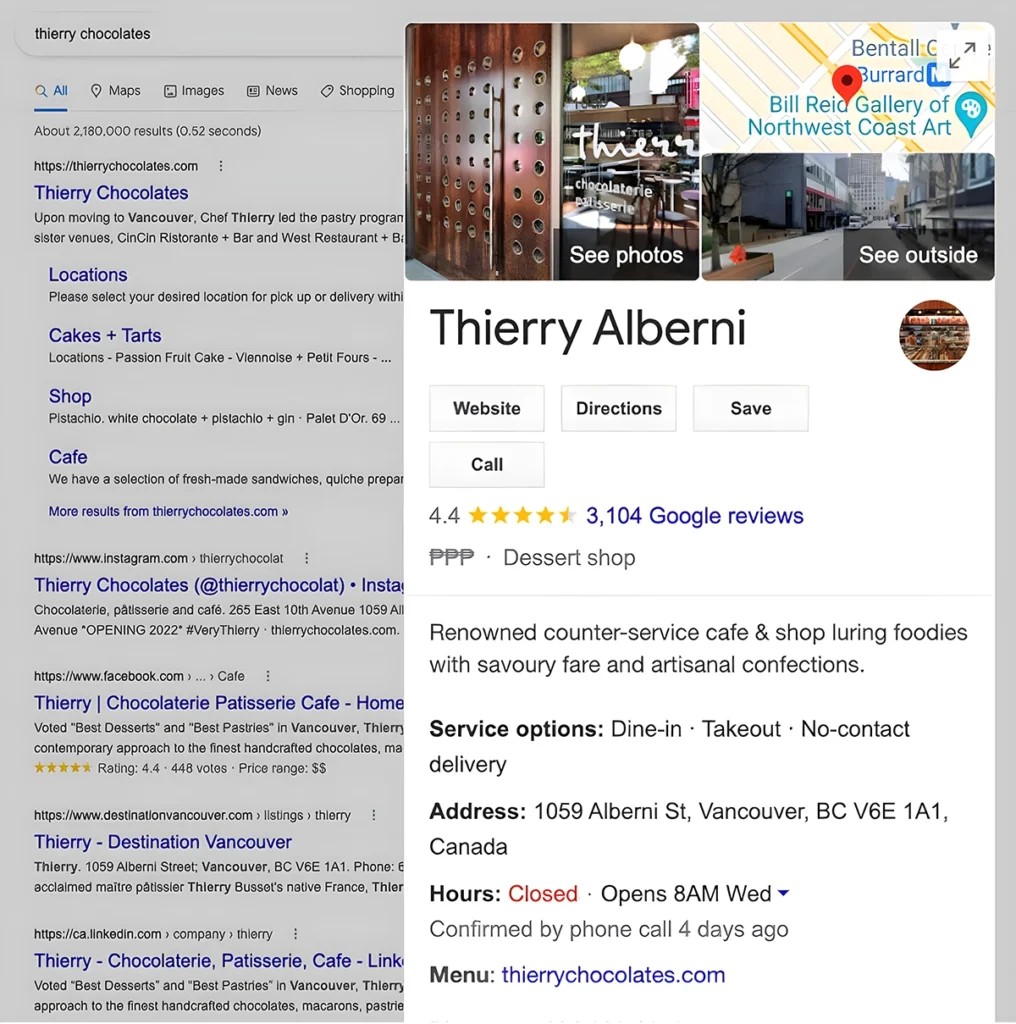
Google Business Profile, which is also known as Google My Profile, is a tool that was released by Google that allows business owners to influence how their brand appears in Google searches, maps, and more. With this tool, business owners can
- Post updates about their business
- Connect and establish a rapport with customers
- List their products/services and more.
2. Yelp
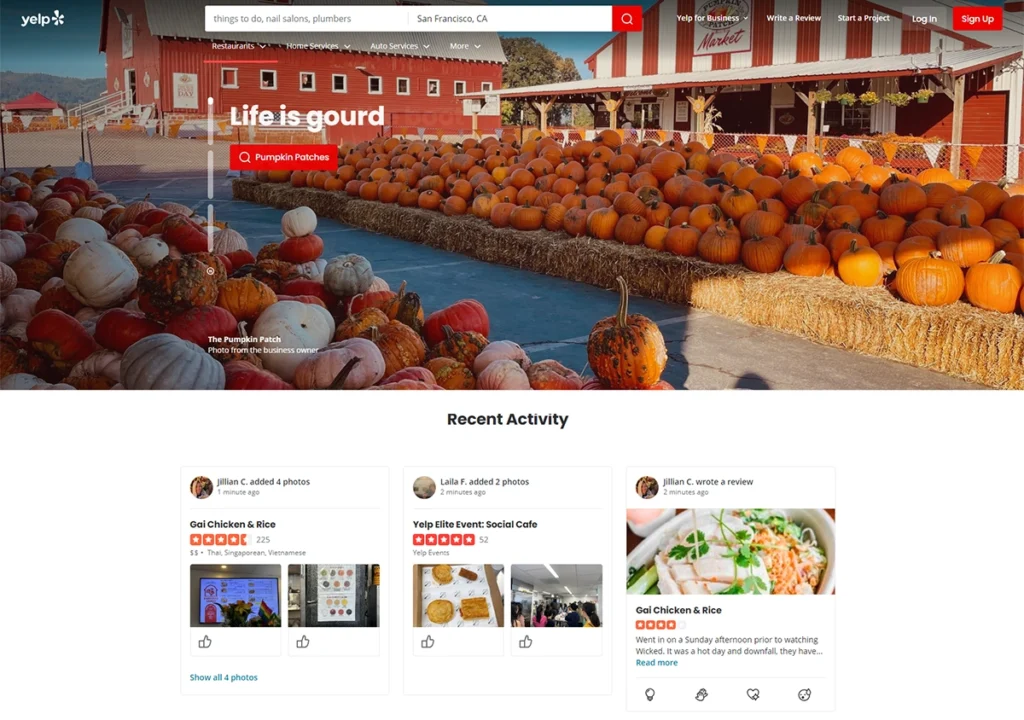
With over 184 million reviews online and 178 million unique monthly visitors monthly, Yelp is one of the best online directories in the world. Yelp is so influential that search engines Bing and Yahoo have removed their review feature section and integrated Yelp into their platforms.
3. Facebook
4. Trust Pilot
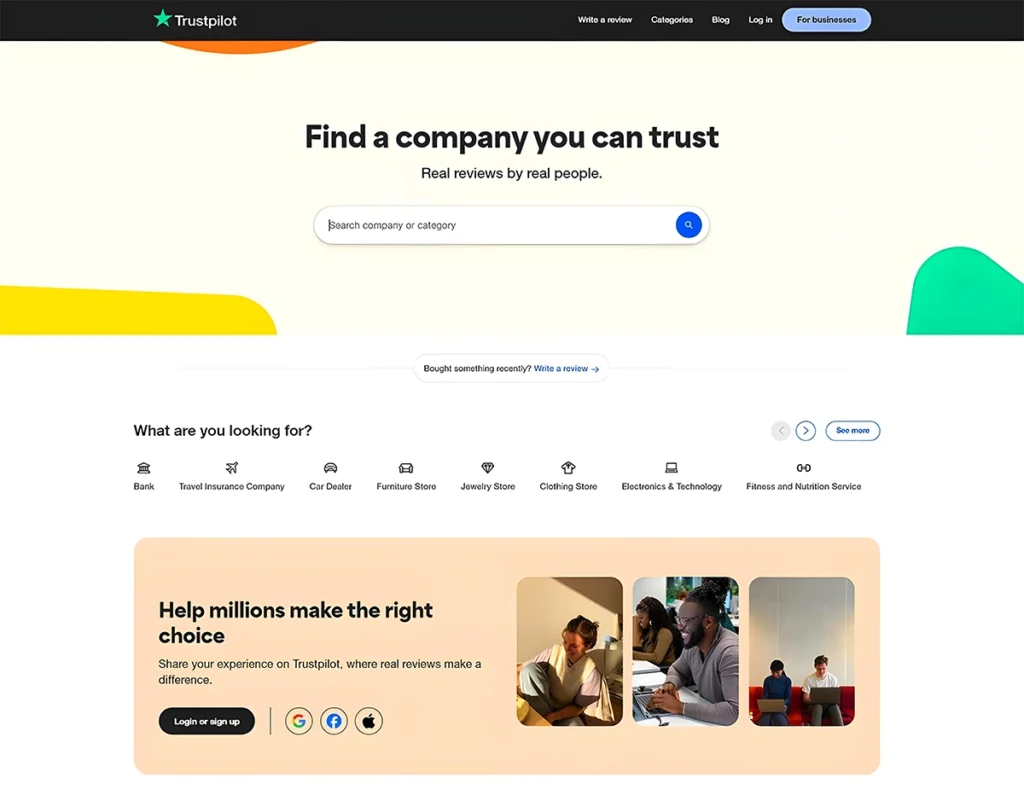
Trust Pilot allows both buyers and business owners to create accounts for free. After completing a purchase process, the site sends an invitation to the buyer. The invitation will contain a step-by-step introduction of the review process.
To ensure accuracy of all reviews posted by the buyers are accurate, screenings are done by both humans and robots.
5. Merchant Circle
The Buyer’s Journey
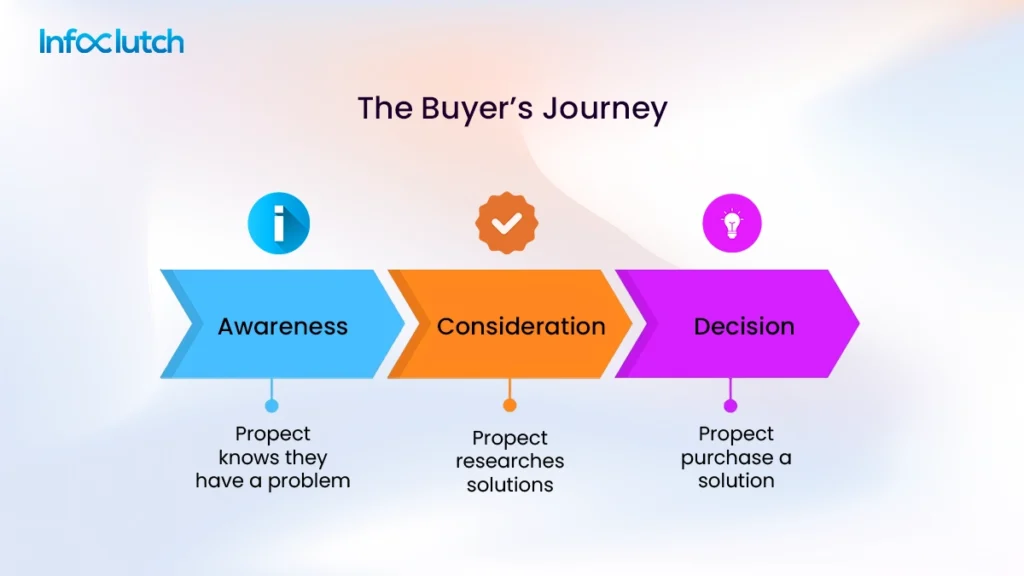
For a business to truly understand the power of online reviews, it must understand the journey of a buyer in the online marketplace.
A buyer’s journey through the digital marketplace is split into 3 stages:
- The Awareness Stage
- The Consideration stage
- The Decision Stage
The Awareness Stage
The awareness stage is that point in the buyer’s journey where they become aware of their problem/pain point. This stage can begin from a moment of epiphany, a brief ad they might’ve seen on their device, or through a piece of content. This is the stage where the buyer makes 1st contact with your brand.
For instance, let us consider a buyer. They have a software tool that can reduce the repetitive work that comes with the documentation process in an agency. At this point, they might search “how to reach the CTO of top agencies” and come across your product. The awareness stage is where the buyer needs information to understand their problem and in this case it’s about finding CTO email lists
The Consideration Stage
This is the stage in a buyer’s journey where they discover the solution to their pain point and are now exploring options. The buyer would surf the internet for reviews and testimonials to find the best organization that sells CTO email lists.
This is the most critical stage, where reviews matter. If your website has above-average reviews and glowing testimonials, you can convert the buyer to your website, where they understand your product and how it can help them solve their issue.
The Decision Stage
This is the final stage of the journey, and the buyer is ready to lock in on the purchase. At this stage, they will list out all the potential brands that can offer them the perfect email list. They will weigh the positives and negatives of each brand based on the reviews and will lock in on the product that fits their need the best.
From the above-mentioned instance, it is quite clear that reviews have a huge impact on all stages of a buyer’s journey of purchasing a product. According to the latest studies:
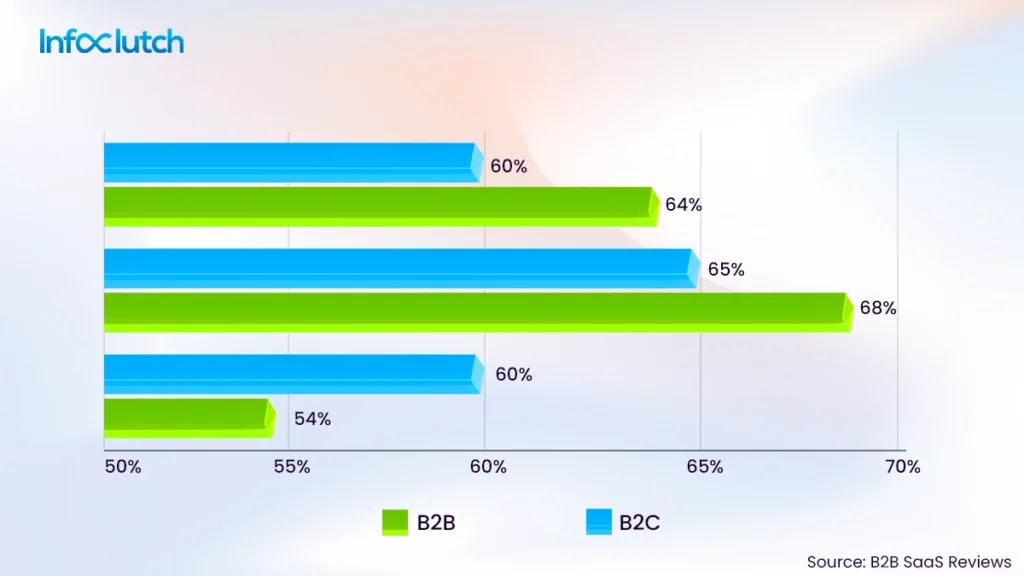
- In the awareness stage, almost 64% of buyers go through reviews to buy a B2B product.
- In the consideration stage, almost 68% of buyers go through reviews to buy a B2B product. The consideration stage is that point in the journey where there is most focus on reviews.
- In the decision stage, only 54% of buyers go through reviews. This points out the fact that the majority of buyers would have narrowed down their decision during the consideration stage.
Negative Reviews Aren’t Always Bad!
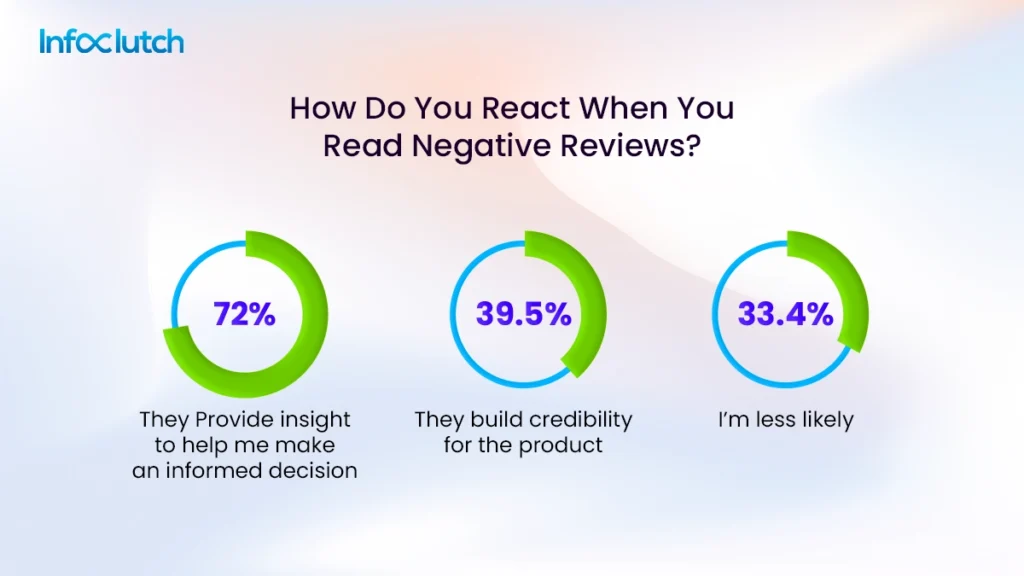
3 Reasons to Channel Positive out of Negative Reviews
1. Drive Innovation into your Products
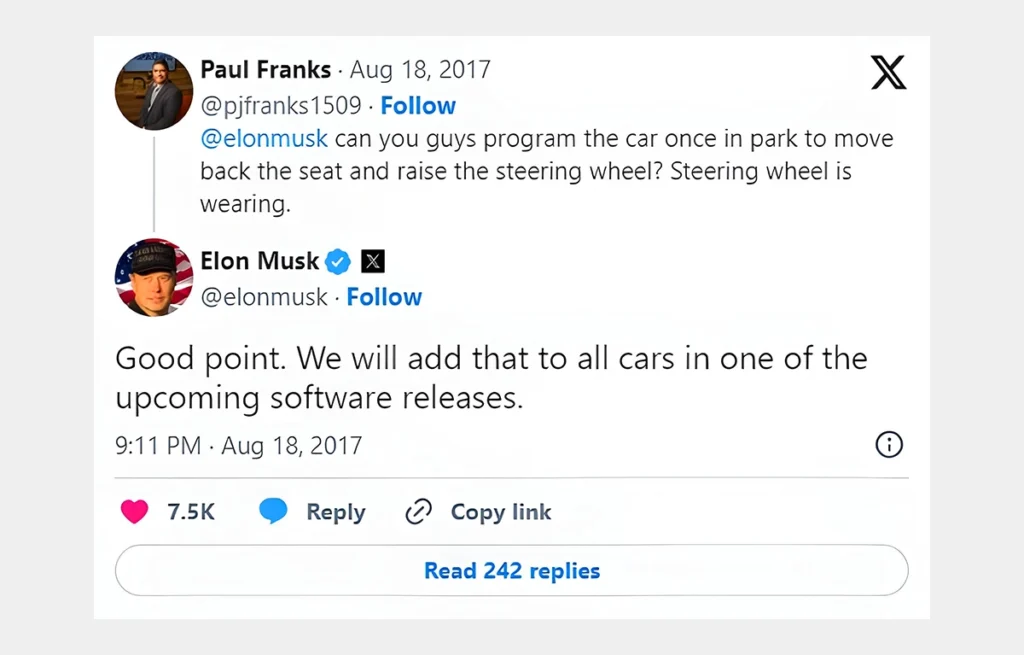
Like necessity is the mother of invention, reviews can be a source of innovation. By heeding the negative reviews, you get to understand what your product/service lacks, fine-tune it, and ultimately drive more sales into your brand.
An instance where a buyer asked, and a business listened and innovated was when Elon Musk, the CEO of Tesla, replied to the tweet of a concerned Tesla owner regarding the issue of steering wheel wear he was facing.
2. Identify the Errors and Problems
Negative reviews are imperative to understand your product quality. It can help you uncover errors and flaws that you might’ve missed during quality testing. According to The Bazaar Voice, 4% of the reviews note manufacturing issues, and 2% identify product improvement and additions.
So the next time you see a review regarding product errors, use that to make your product better and show buyers how important quality is for your brand.
3. Makes your Brand more Authentic
According to Alyssa Thomas, Director of Product, Content as Commerce, at Walmart.com, “One of the things that we are not willing to sacrifice is authenticity. So, one of the really important parts of customers reading ratings and reviews is that they trust that they’re authentic and relevant to the item. Otherwise, we potentially lose that trust that customers were looking for from reviews in the first place.”
Buyers know that nothing is perfect and that every product has its own shortcomings. This is why they expect to see mixed reviews when it comes to product reviews. The best thing to do in this situation is to be authentic and more transparent. By replying to the comments of your buyers, not only are you making sure all queries are solved, but it also makes you more authentic from the perspective of your potential buyers.
So the question you might have in your mind right now would be …
Should One Respond to Negative Reviews?
There’s only one answer to this question, and that’s yes. Reputation management plays a major role in keeping your brand thriving and growing. When you reply to a negative comment on your website, you are forming a bond with your buyers. What’s more, is that buyers expect you to reply to their reviews.
According to Bazaar Voice, almost 54% of shoppers say that if they write a review, they expect the business to respond to it and almost 87% of them expect the brand to reply with something constructive or offer them discounts for future purchases.
So make sure that you reply to the reviews in a kind and helpful manner, as 89% of the buyers tend to read the replies to negative reviews.
3 Ways to Respond to Negative Reviews
1. Be Extremely Polite and Empathetic
2. Respond as soon as Possible
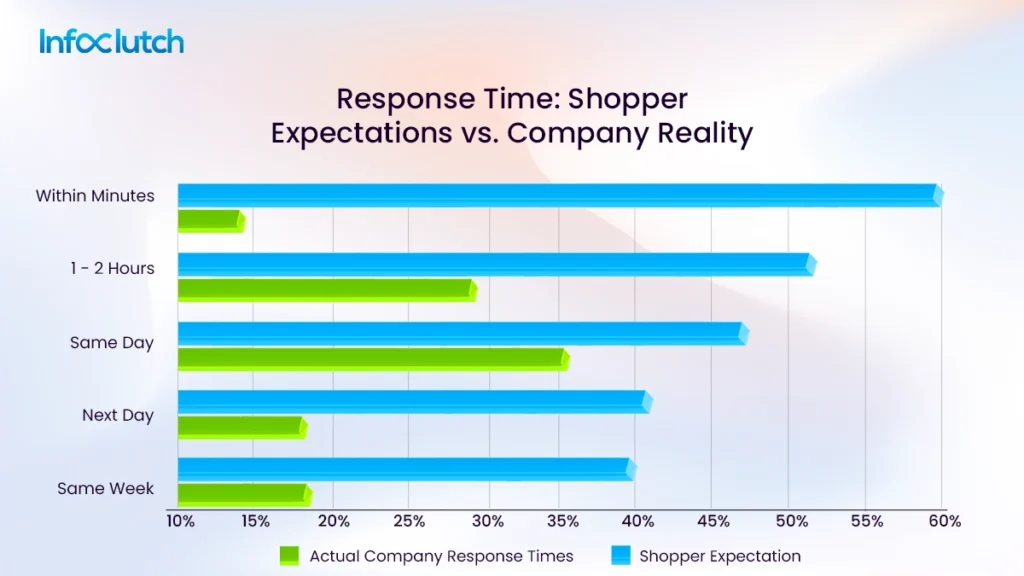
Response time is an important factor you must consider while dealing with negative reviews. Even though the majority of buyers expect brands to reply within minutes, ideally, your brand must respond to a review in 24-48 hours.
3. Be Personal and Stick to the Point
Personalization can take you a long way in terms of maintaining a rapport with your buyers. The first and best thing that you can do is to refer to your buyers using their first names. Make sure that they understand that you have a clear idea of their problem and that you are actively trying to resolve it.
Another tip would be to make sure that each response you give is authentic and original. Avoid writing the same scripted replies, as it might come off as your brand slacking or not caring enough. Even if most of the replies require the same answer, make sure to mix it up and rephrase it for each reply.
Conclusion
With over 93% of buyers reading reviews regularly before buying a product, reviews are not something business owners can avoid. Reviews have to be dealt with strategically and should be a must-have in any marketing plans a brand designs. Make sure to:
- Monitor responses
- Reply quickly
- Give answers with care and empathy
- Learn from the reviews
- Implement remedies
- Reputation management
By following these very simple steps, not only are you building a connection with your buyers, but also shortening the gap between a potential buyer and the purchasing decision.